Formula One

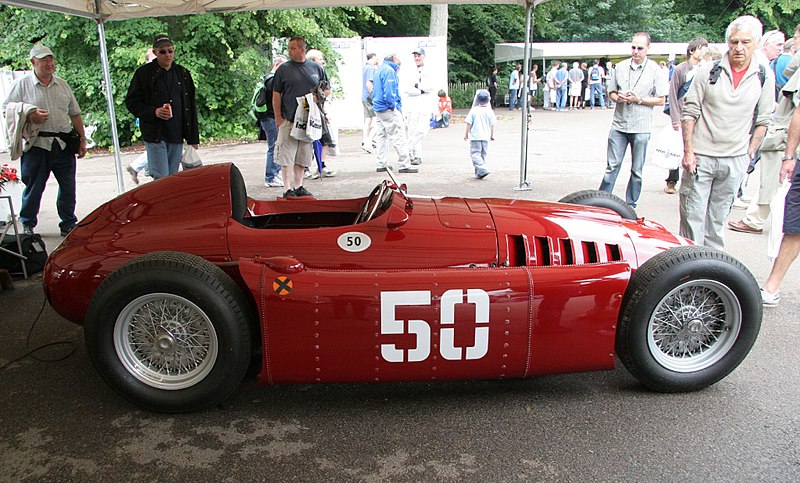
After Vincenzo Lancia’s son Gianni became director of the firm, it started to take part more frequently in motorsport, eventually deciding to build a Grand Prix car. Vittorio Jano was the new designer for Lancia and his Lancia D50 was entered into the 1954 Spanish Grand Prix, where Alberto Ascari took the pole position and drove the fastest lap. In the 1955 Monaco Grand Prix Ascari crashed into the harbour after missing a chicane. One week later Ascari was killed in an accident driving a Ferrari sports car at Monza. With Ascari’s death and Lancia’s financial problems the company withdrew from Grand Prix racing. Altogether Lancia took two victories and ten podiums in Formula One.

Remnants of the Lancia team were transferred to Scuderia Ferrari, where Juan Manuel Fangio won the 1956 championship with a Lancia-Ferrari car.

1954-type Lancia D50A
Lancia Delta S4

Rallying

Lancia has been very successful in motorsport over the years, and mostly in the arena of rallying. Prior to the forming of the World Rally Championship (WRC), Lancia took the final International Championship for Manufacturers title with the Fulvia in 1972. In the WRC, they remain the most statistically successful marque (despite having withdrawn at the end of the 1993 season), winning constructors’ titles with the Stratos (1974, 1975 and 1976), the 037 (1983) and the Delta (six consecutive wins from 1987 to 1992). The Delta is also the most successful individual model designation ever to compete in rallying. All this gave Lancia a total of 11 Championships over the years and 15 European Championship from 1969 to 1992.

Juha Kankkunen and Miki Biasion both won two drivers’ titles with the Delta. Among other drivers to take several World Rally Championship wins with Lancia were Markku Alén, Didier Auriol, Sandro Munari, Bernard Darniche, Walter Röhrl, Björn Waldegård and Henri Toivonen. The history of the brand in rallying is also tainted with tragedy, with deaths of Italian driver Attilio Bettega at the 1985 Tour de Corse in a Lancia 037 and then Finnish championship favourite Toivonen in a Lancia Delta S4 at the same rally exactly a year later. These deaths would eventually lead to the end of Group B rallying.

Sports Car Racing

In 1951 Mille Miglia, Lancia Aurelia B20 GT came second overall. The car was driven by Bracco / Maglioli .

In 1953, Umberto Maglioli won the Targa Florio at the wheel of the Lancia D20. The same year Lancia introduced the D24 sports racer, which was an evolution of D23 model, but rebodied as a spider by Pinin Farina. Its most significant victories were the 1953 Carrera Panamericana, the 1954 Mille Miglia and the 1954 Targa Florio.

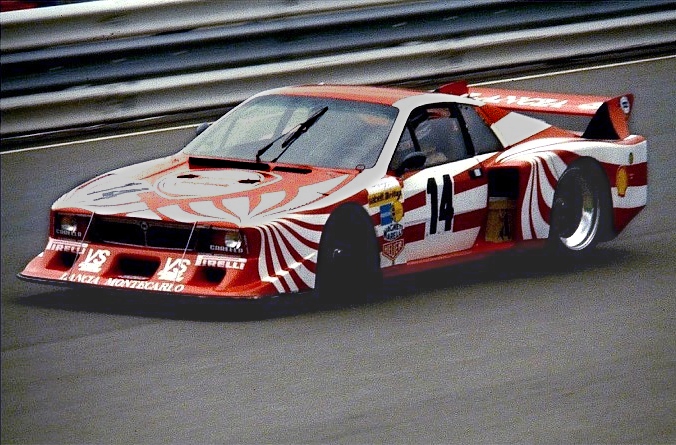
During Lancia’s dominance of rallying, the company also expanded into sports cars in the late 1970s until the mid-1980s. It first ran the Stratos HF in Group 4, and for a brief interlude with a rare Group 5 version. The car was replaced with the successful Beta Montecarlo Turbo winning the FIA’s 1980 World Championship for Makes and 1981 World Endurance Championship for Makes and the 1980 Deutsche Rennsport Meisterschaft.

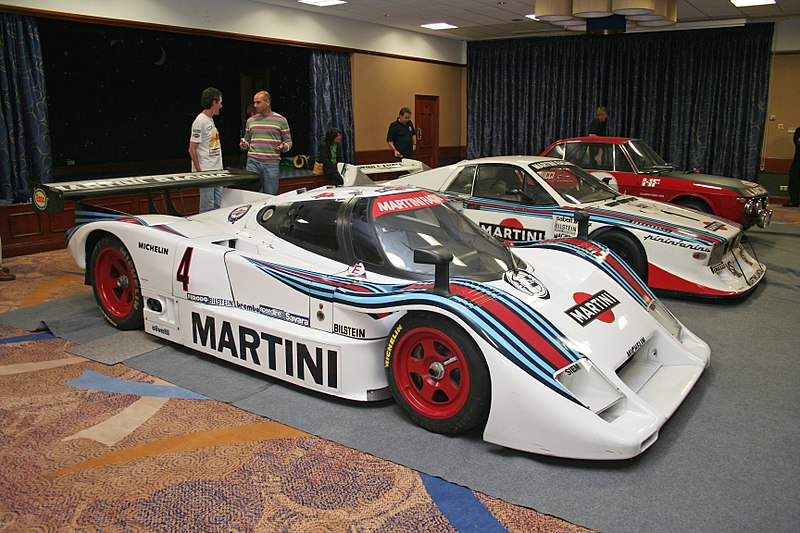
In 1982 the team moved up to Group 6 with the LC1 Spyder, followed by the Group C LC2 coupé which featured a Ferrari powerplant in 1983. The LC2 was a match for the standard-setting Porsche 956 in terms of raw speed, securing 13 pole positions over its lifetime; however, its results were hampered by poor reliability and fuel economy, and it only managed to win three European and World Endurance Championship races. The team’s inability to compete against the dominant Porsche 956 and 962 sports cars led it to drop out of sportscar racing at the end of 1986 in order to concentrate on rallying, although private teams continued to enter LC2s with declining results until the early 1990s.

Titles

1979 World Championship for Makes (under 2-litre division)
1980 World Championship for Makes (overall)
1981 World Endurance Championship for Makes (overall)
1980 Deutsche Rennsport Meisterschaft

Lancia Beta MonteCarlo
Lancia LC2