Production
1963 – 1976
Engines
1,091 cc Lancia V4 (petrol)
1,199 cc Lancia V4 (petrol)
1,216 cc Lancia V4 (petrol)
1,231 cc Lancia V4 (petrol)
1,298 cc Lancia V4 (petrol)
1,584 cc Lancia V4 (petrol)


Production
1963 – 1976
Engines
1,091 cc Lancia V4 (petrol)
1,199 cc Lancia V4 (petrol)
1,216 cc Lancia V4 (petrol)
1,231 cc Lancia V4 (petrol)
1,298 cc Lancia V4 (petrol)
1,584 cc Lancia V4 (petrol)
Designers
Piero Castagnero at Centro Stile
Lancia (Berlina and Coupé)
Ercole Spada at Zagato (Sport)
Body styles
4-door saloon (Berlina)
2-door coupé (Coupé)
2-door fastback coupé (Sport)
Layout Front-engine, front-wheel-drive


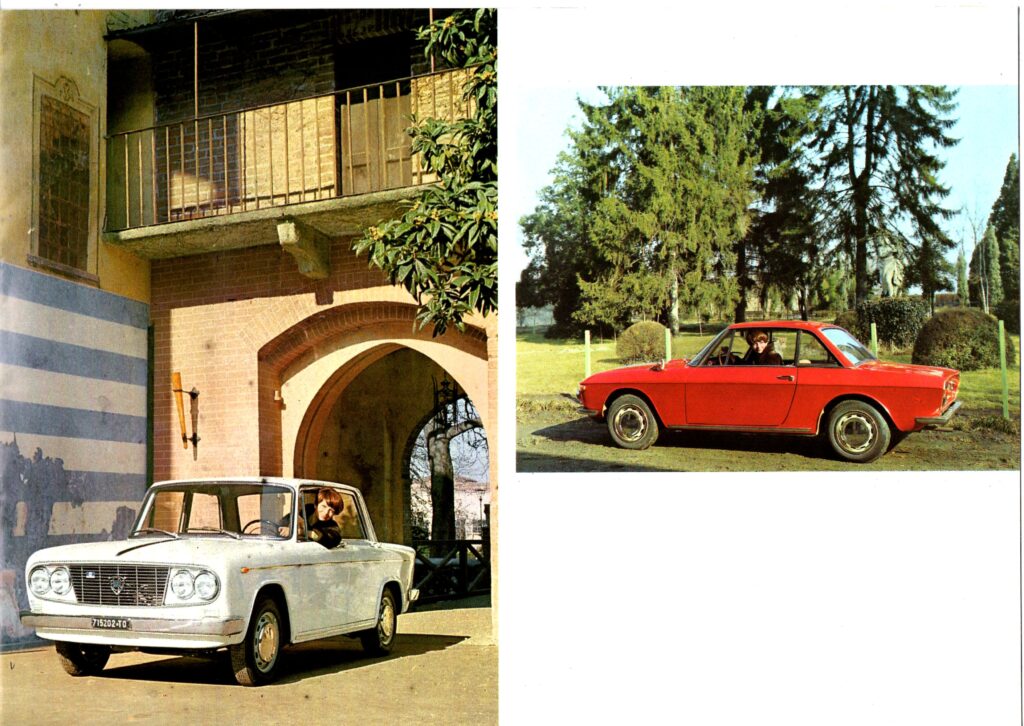
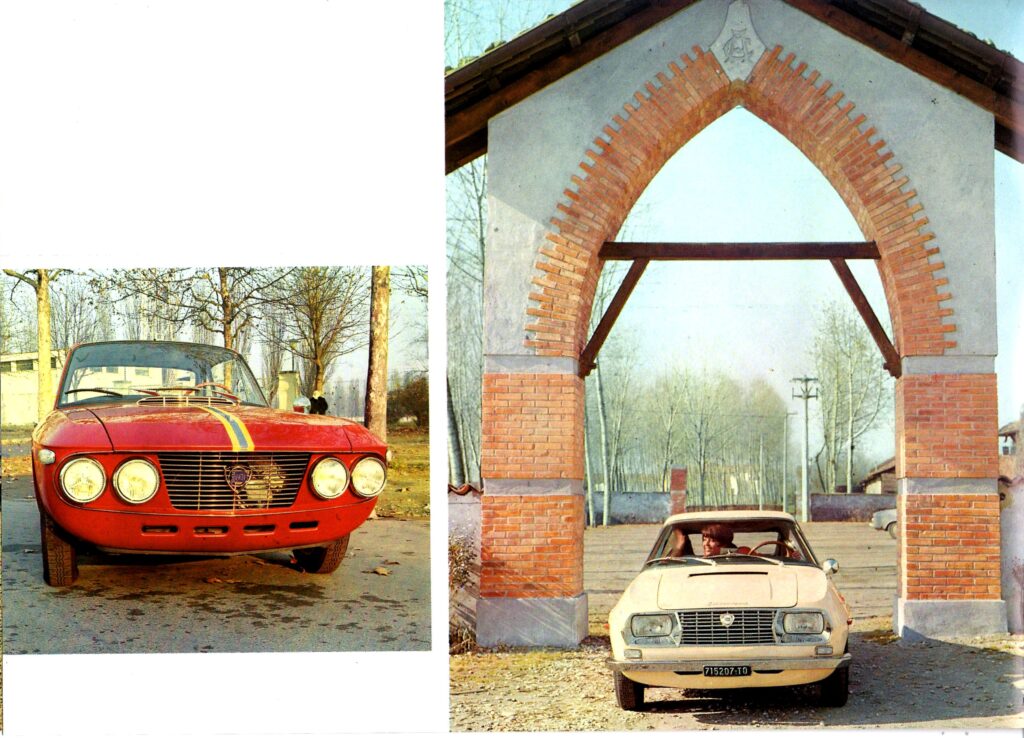

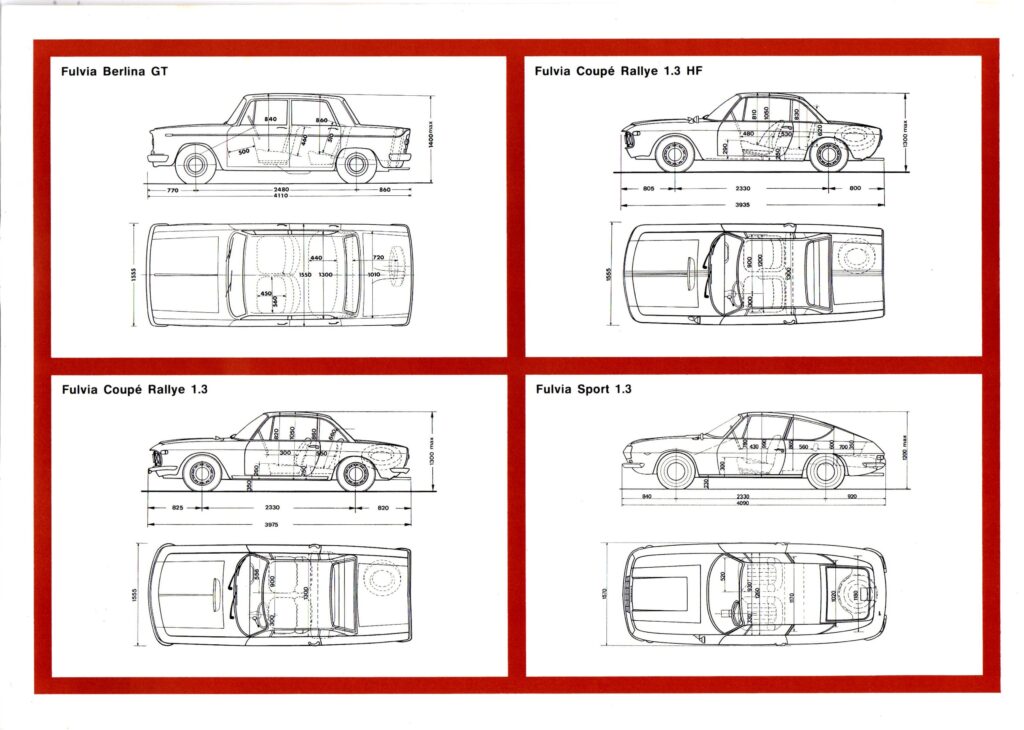


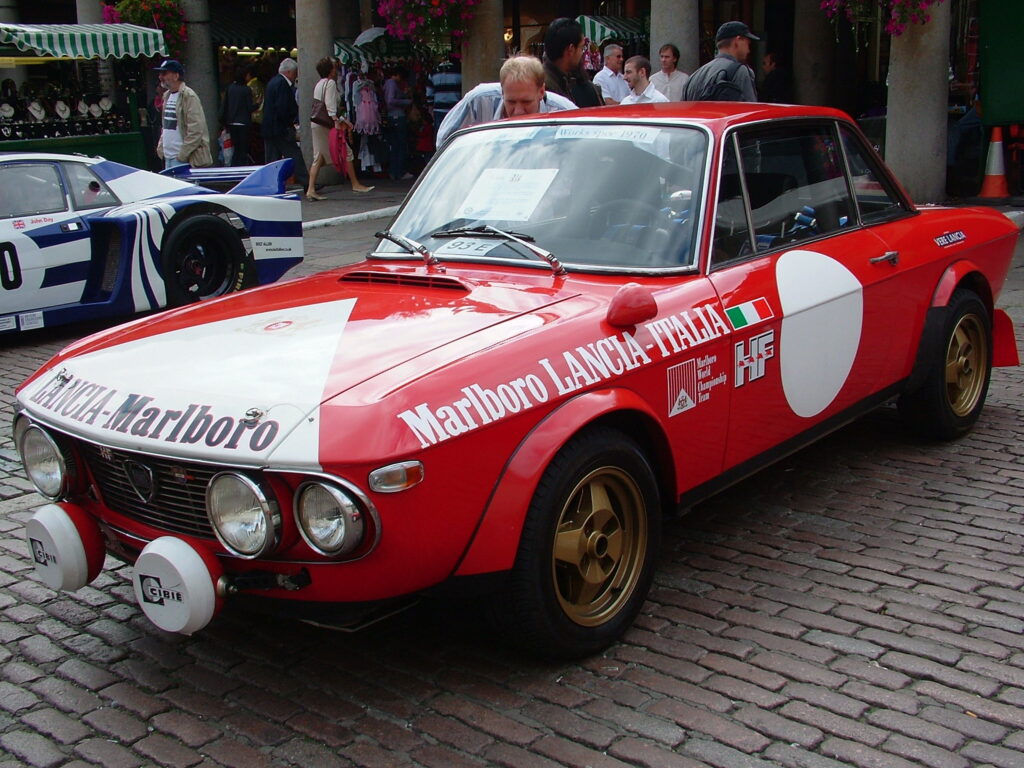
The Lancia Fulvia was introduced at the Geneva Motor Show in 1963 and manufactured in three variants: Berlina 4-door saloon, 2-door Coupé, and Sport, an alternative fastback coupé designed and built by Zagato on the Coupé floorpan. Fulvias are noted for their role in motorsport history, including a 1972 win of the International Rally Championship. Road & Track described the Fulvia as “a precision motorcar, an engineering tour de force”.
The Fulvia Berlina was designed by Antonio Fessia, to replace the Lancia Appia with which it shared almost no components. The Appia was a rear wheel drive car, however, while the Fulvia moved to front wheel drive like the Flavia. The general engineering design of the Fulvia was identical to that of the Flavia with the major exception of the engine, the Flavia having a four-cylinder horizontally opposed engine and the Fulvia a ‘Narrow Angle’ vee configuration as featured on most production Lancias from the Lambda. The Fulvia used a longitudinal engine mounted in front of its transaxle. An independent suspension in front used wishbones and a single leaf spring, while a beam axle with a panhard rod and leaf springs was used in back. Four wheel Dunlop disc brakes were fitted to first series Fulvias. With the introduction of the second series in 1970 the brakes were uprated with larger Girling calipers all round and a brake servo. The handbrake design was also changed – using separate drums and brake-shoes operating on the rear wheels.
The Fulvia’s narrow-angle DOHC Lancia V4 engine was mounted well forward at a 45° angle. A new design, by Zaccone Mina, its unusually narrow 12° V allowed a single cylinder head to cover all the cylinders, with one cam each for intake and exhaust valves.
Displacement started out at just 1091 cc, with a 72 mm bore and 67 mm stroke. Fitted with a single carburettor it produces 58 CV (43 kW; 57 hp). A higher (9.0:1) compression ratio and twin Solex carburettors raised power to 71 CV (52 kW; 70 hp) soon after.
The engine was bored to 76 mm for the 1216 ccHF model. With additional tuning output was raised from 80 to 88 CV (59 to 65 kW; 79 to 87 hp).
The engine was re-engineered with a slightly narrower bank angle (from 12°53’28” down to 12°45’28”) and longer (69.7 mm) stroke for 1967. Three displacements were produced: 1199 cc (74 mm bore), 1231 cc (75 mm bore), and 1298 cc (77 mm bore). The new 1298 cc engine was produced in two versions; the type 818.302 produced 87 bhp (65 kW) at 6000 rpm and was fitted to first series Coupés, Sports and Berlina GTE and later to the second Series Berlina. The Type 818.303 was first produced with 92 CV (68 kW; 91 hp) and was fitted to the first series Coupé Rallye S and Sport S. For the second Series Coupé and Sport power was slightly reduced to 90 CV (66 kW; 89 hp) at 6000 rpm. The 1199 cc engine was only fitted to the Berlina sold in Greece.
The engine was completely reworked for the new 1.6 HF with an even-narrower angle (now 11°20′) and longer 75 mm stroke combined with a bore of 82 mm gave it a displacement of 1584 cc, and power ranged from 115 to 132 CV (85 to 97 kW; 113 to 130 hp) depending on tune.
It was with the Fulvia that Lancia went officially back into racing after its withdrawal from Formula 1 in 1955; this time the effort was focused on rallying. In 1965 the company absorbed the HF Squadra Corse, a privateer racing team founded by Lancia enthusiasts which previously received some factory support, which became the works team under the direction of Cesare Fiorio.[18] The same year the Fulvia Coupé made its racing debut at the Tour de Corse, placing 8th overall.[19] Starting with the lightened and more powerful 1965 Rallye HF, special HF version were put on sale to the general public to homologate improvements for the rally cars. In 1967 the larger displacement Rallye 1.3 HF followed. As the V4 engine had reached the limit of its development, an all-new 1.6-litre V4 engine was developed and installed on the 1967 Rallye 1.6 HF. The car raced as a prototype until August 1969, when it received FIA homologation.
With the exception of 1970, Fulvias won the Italian Rally Championship every year from 1965 to 1973. The Fulvia’s rallying career reached its zenith in 1972, when Lancia won the International Championship for Manufacturers two rounds in advance. First placements at rallies valid for the Championship were three: included Sandro Munari and Mario Mannucci at the famous Monte Carlo Rally, with a 10′ 50″ margin over the runner up, Larrousse/Perramond on a much more powerful Porsche 911 S,[21] Lampinen/Andreasson at the Rallye du Maroc, and Ballestrieri/Bernacchini at the Rallye Sanremo. In 1973 Lancia did not score any podium finishes valid for that year’s first-ever World Rally Championship season; though at the hands of Munari the Fulvia won its second European Rally Championship, after the 1969 victory by Harry Källström. During the 1974 season the Lancia Stratos HF replaced in rallying the—by then ageing—Fulvia. That year Lancia won its second World Championship, also thanks to points scored by the Fulvia in the first rallies—such as the third place Munari caught in the grueling East African Safari Rally.