Production
1972–1984
Engines
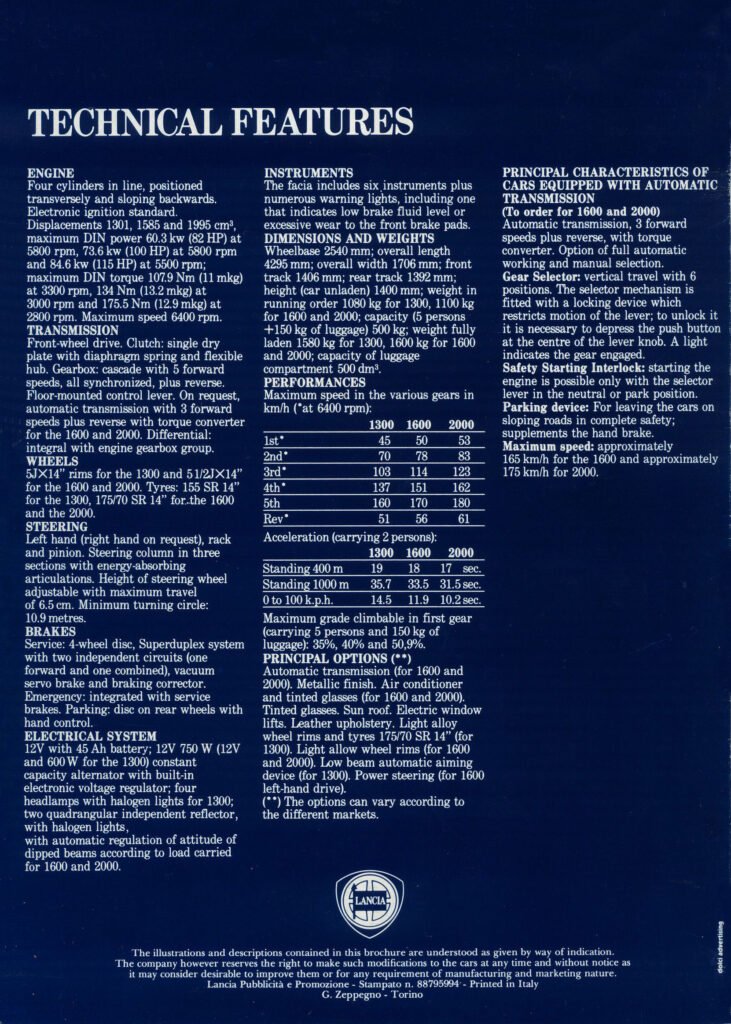
1.3 L I4 (petrol)
1.4 L I4 (petrol)
1.6 L I4 (petrol)
1.8 L I4 (petrol)
2.0 L I4 (petrol)
2.0 L I4 (supercharged petrol



Production
1972–1984
Engines
1.3 L I4 (petrol)
1.4 L I4 (petrol)
1.6 L I4 (petrol)
1.8 L I4 (petrol)
2.0 L I4 (petrol)
2.0 L I4 (supercharged petrol
Body styles
4-door fastback saloon (berlina)
4-door notchback saloon (Trevi)
2-door coupé
2-door targa (Spider)
3-door estate (HPE)
2-door mid-engined coupé (Montecarlo)


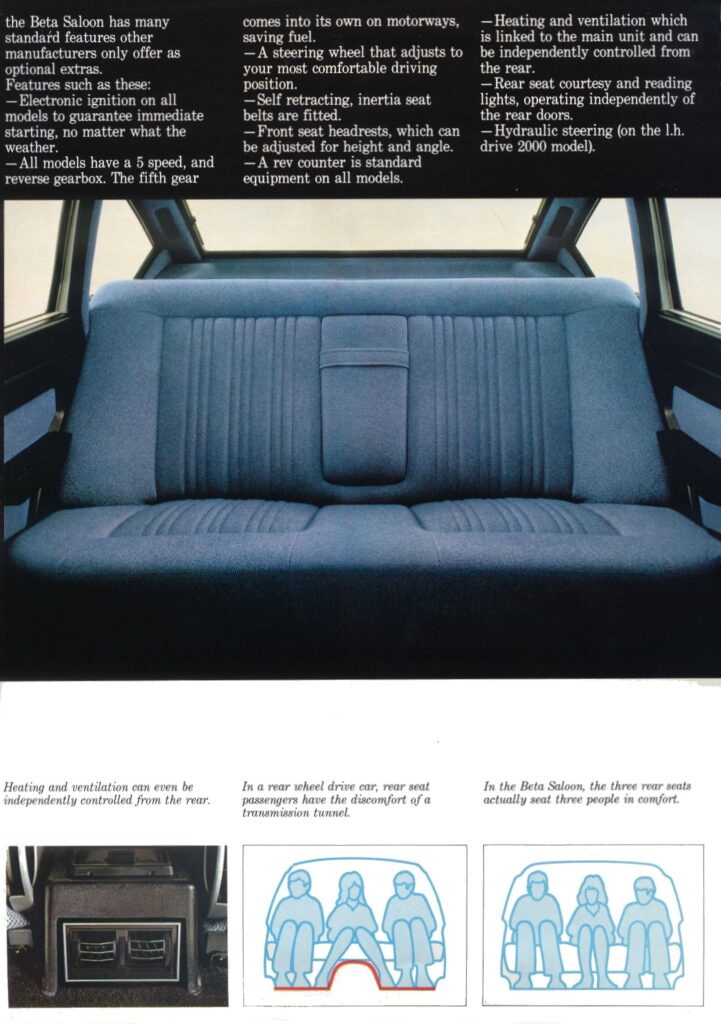

The Beta was made in several body styles, namely 4-door fastback saloon (Beta berlina), 4-door three-box, notchback saloon (Beta Trevi), 2-door coupé (Beta Coupé), 2-door targa (Beta Spider), 3-door estate (Beta HPE); a mid-engined sports car was also sold under the Beta name, the Lancia Beta Montecarlo.
When Fiat acquired Lancia in 1969, the company had been without a Technical Director for the year following the death of Technical Director Antonio Fessia. Ing. Sergio Camuffo was given the job of developing the new model in early 1970.
Although in the difficult years before the Fiat take-over, a number of the engineering staff had left the company, Camuffo was able to pull together a core of Lancia engineers — who were tasked with getting the car into production by the end of 1972. Romanini, chassis design, Zaccone Mina, engine development, with Gilio and Bencini in testing. This was a very short timeframe, and development money was relatively limited. These were key factors that influenced the decision to use an existing power plant: the Fiat twin overhead cam straight four engine with its alloy head and cast iron block.
At the Beta’s launch late in 1972 Fiat chief Gianni Agnelli told journalists that Lancia’s output would be about 40,000 units in 1972 at a time when a volume of 100,000 was needed to cover the fixed costs involved in developing and building the cars.[2] Lancia’s lack of profitability was also evidenced by the absence of replacement models under development at the time of the Fiat take-over. The Lancia Fulvia, though much loved, had been developed with little concern for making it cost-effective to manufacture; it had therefore been sold at a high price in correspondingly low volumes.[2]
The company’s new owner’s objective with the new Beta was to retain the quality image and price premium of existing Lancias, while minimising development time and production costs — using in-house Fiat group technology and parts where possible.[2] The project adapted a well-regarded existing Fiat engine, fitted transversely and driving the front wheels, in line with Fiat’s investment in this configuration during the previous decade.[2] The gear box was a development of a transmission unit then being developed by Fiat-partner Citroën for a forthcoming model of their own. Above all, and in contrast with the Fulvia, the Beta design was relatively inexpensive to produce in volumes significantly higher than those achieved by predecessor Lancia saloons.