Production
1961–1971 (Flavia)
1971-1975 (2000)
105,848 produced
Engines
1.5 L (1488 cc) Lancia H4
1.8 L (1800 cc) Lancia H4
2.0 L (1991 cc) Lancia H4



Production
1961–1971 (Flavia)
1971-1975 (2000)
105,848 produced
Engines
1.5 L (1488 cc) Lancia H4
1.8 L (1800 cc) Lancia H4
2.0 L (1991 cc) Lancia H4
Designers
Piero Castegnero (Berlina)
Pininfarina (Coupé)
Giovanni Michelotti at Vignale (Convertible)
Ercole Spada at Zagato (Sport)
Body styles
4-door sedan
2-door coupé
2-door cabriolet
2-door coupé (Zagato)
2-door coupé (Touring)
2-door convertible (Touring)
4-door landaulet (Pininfarina)
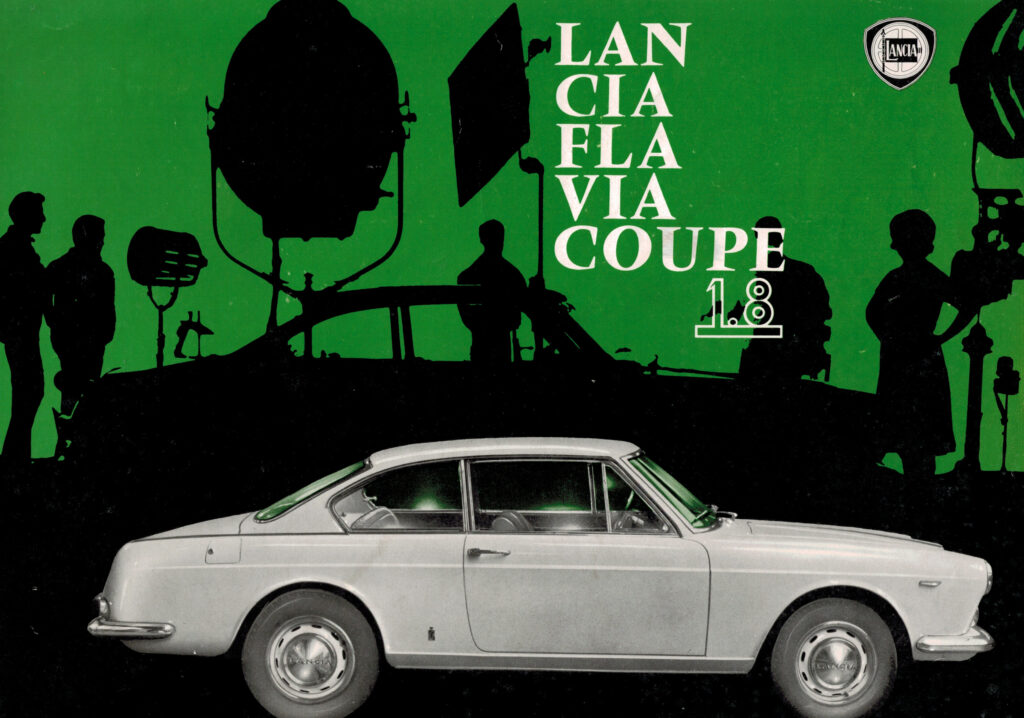
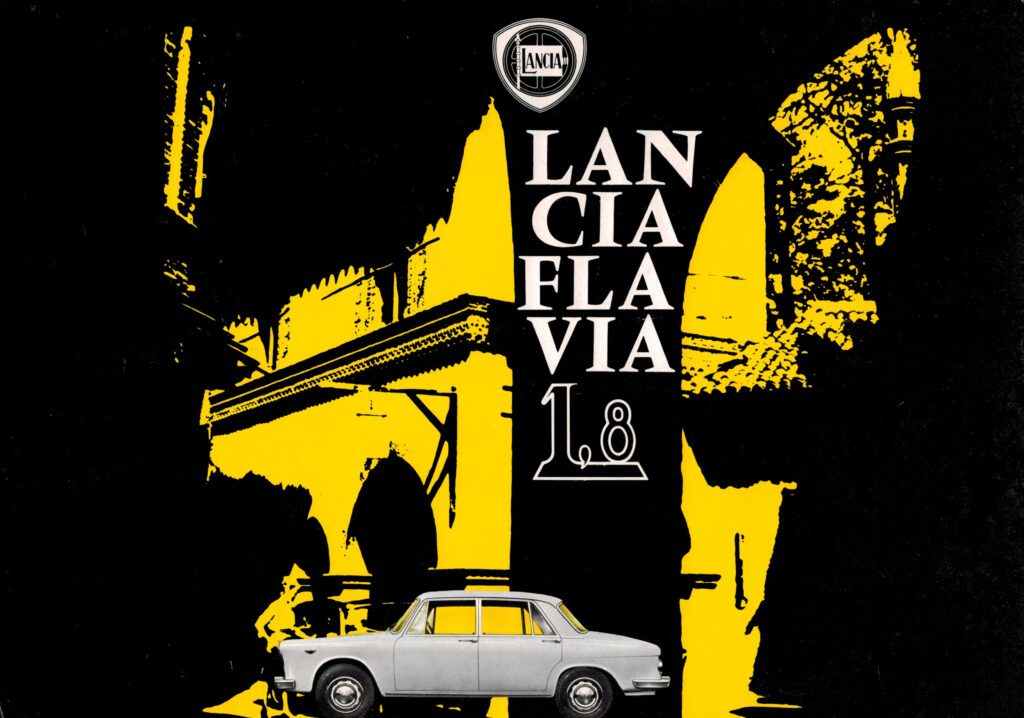
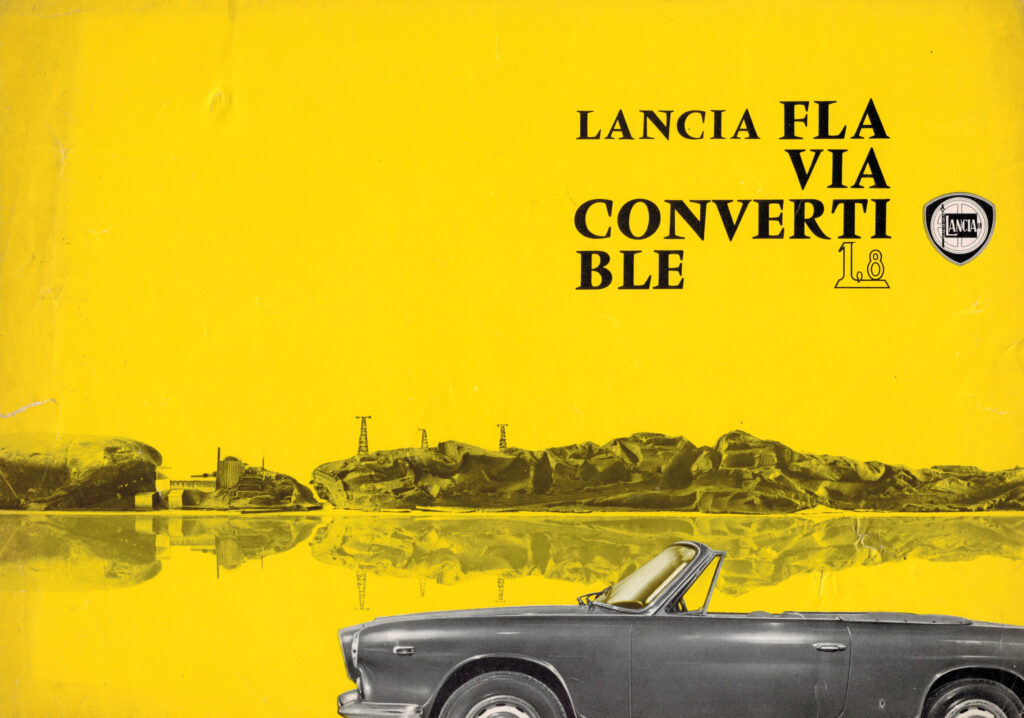


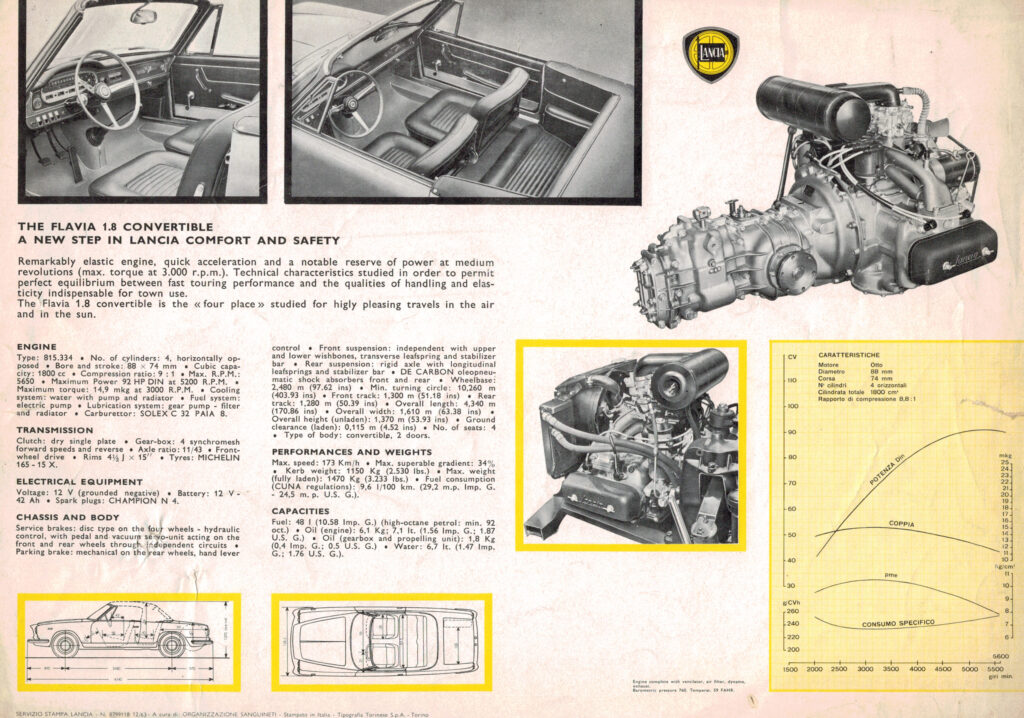
The Flavia was launched with a 1,500 cc engine at the 1960 Turin Motor Show by Lancia and introduced in major European markets during the next twelve months. Coupé and convertible versions developed by Pininfarina and Vignale quickly followed, together with one or two low volume “specials” including a Zagato coupé. Performance improved over the next ten years as the engine sizes increased, progressively, to 2,000 cc. The car remained in production until 1970 when it was updated and renamed the Lancia 2000. The Flavia was named after Via Flavia, Roman road leading from Trieste (Tergeste) to Dalmatia.
In 2011, Fiat announced that the Chrysler 200 convertible would be sold in Europe (LHD markets only) by Lancia under the Flavia name from early 2012.
In 1977, Singer Peter Gabriel released his first solo album with the cover depicting the artist asleep in the passenger seat of a 1974 Lancia 2000. The album is informally referred to as “Car”.
The Lancia Flavia was developed by Antonio Fessia in the late 1950s, and introduced for sale in the UK in 1961. Initially available only as a four-door saloon, it featured a 1.5 L aluminium boxer engine, Dunlop disc brakes on all four wheels, front-wheel drive, and front suspension by unequal-length wishbones.[5] This model was soon joined by a two-door coupé, designed by Pininfarina on a shortened platform. Vignale built 1,601 two-door convertibles, while Zagato designed an outlandish-looking lightweight two-door “sport” version.[6] Only 626 of the Zagato-bodied models were built, plus three prototypes. Ninety-eight were 1500s and the remaining 512 received the larger 1800 engine.
The sport version has twin carburetors for extra power (just over 100 CV [74 kW]); however, this version of the engine was notoriously difficult to keep in tune. Even the single-carburettor engine suffered from the problem of timing chain stretch. Sprockets with Vernier adjusters were fitted to allow for chain wear, and the cam timing was supposed to be checked every 6,000 miles (9,700 km). Early cars also suffered from corrosion of the cylinder heads caused by using copper gaskets on aluminium heads; nevertheless, the car was quite lively for its day, considering the cubic capacity. When leaving the factory, Flavias originally fitted either Pirelli Cinturato 165HR14 tyres (CA67) or Pirelli Cinturato 155HR15 tyres (CA67).
Later development of the engine included an enlargement to 1.8 L, a mechanical injection version using the Kugelfischer system, and a five-speed manual gearbox. In May 1967 a rebodied version of the Berlina with a new interior went on sale, with model number 819, it is usually referred to as the Series II. The engines were originally the same as earlier (74 mm stroke in 1500, 1800, 1800 fuel injected), but in 1969 these were changed to a new generation with an 80 mm stroke, narrow-bore versions of the new 2-litre 820-series engine. With the introduction of the 819, the Vignale and Zagato versions were discontinued, while the coupé model was on hiatus.
The coupé version then returned with new bodywork, first presented in March 1969 at the Geneva Motor Show.[8] The engine increased to 2.0 L in capacity, available with carburetion or injection, and four- or five-speed gearbox. The 2.0 L models were only made with revised Pininfarina coupé and revised Lancia sedan bodies. Then in 1971, after Fiat took control of the company, the “Flavia” badge was discontinued as were the smaller engines, leaving only the 2000 Berlina and coupé.