Production
1953–1963
Engines
1.1L Lancia V4 (petrol)



Production
1953–1963
Engines
1.1L Lancia V4 (petrol)
Designers
Pinin Farina (Coupé)
Giovanni Michelotti at Vignale (Convertibile and Lusso)
Zagato (Appia Zagato)
Body styles
4-door saloon
2-door saloon (Vignale)
2-door coupé (Pinin Farina)
2-door coupé (Zagato)
2-door convertible (Vignale)
3-door estate (Viotti)
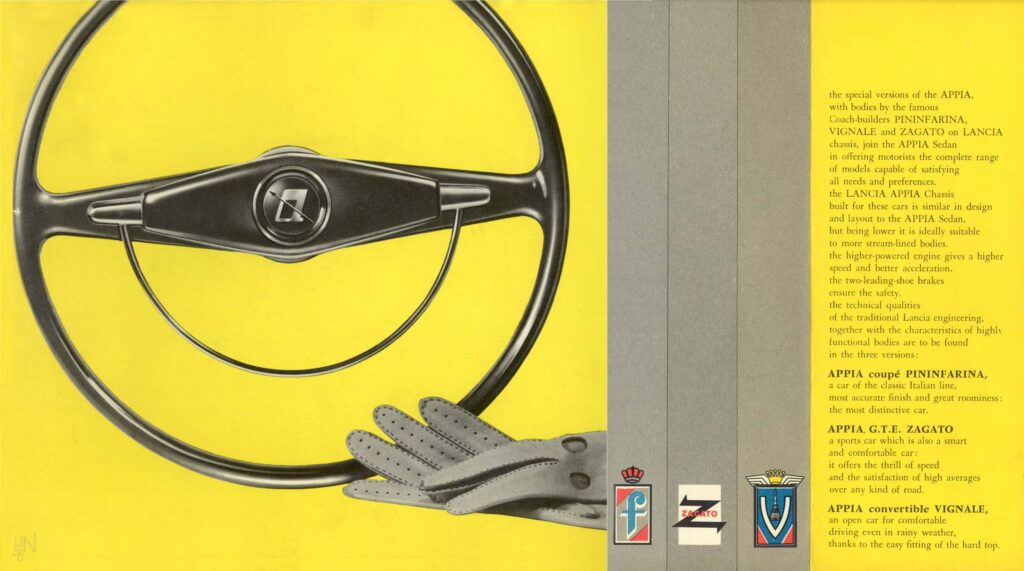
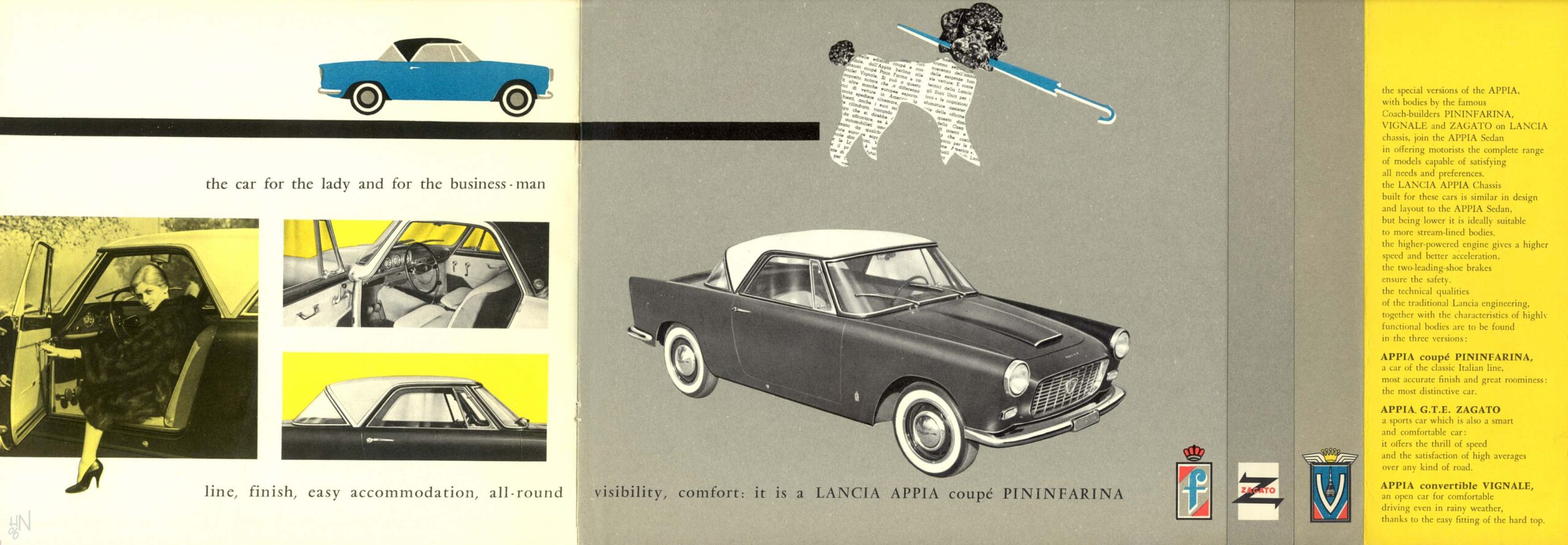
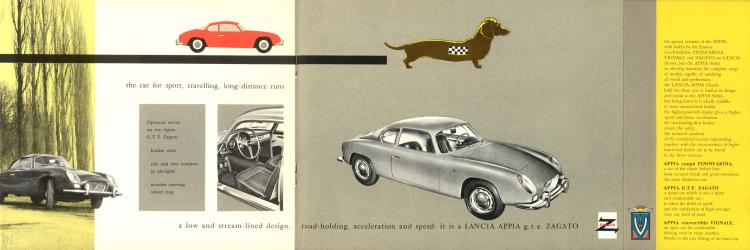
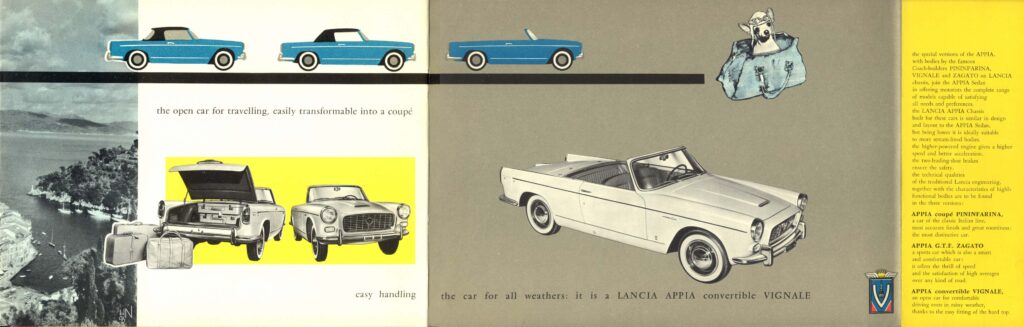
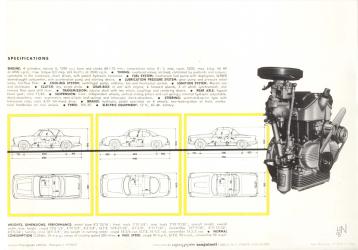
The Appia was the last in a long line of Lancia production cars dating back to the Lancia Lambda (introduced in 1922) to use sliding pillar front suspension. All three series produced had a 1089cc Lancia V4 engine.
In addition to the saloon, a number of special bodied Appias were produced, including a coupé by Pinin Farina, a convertible and 2-door saloon by Vignale and an aluminium-bodied GT by Zagato, as well as light commercial vehicle variants. In total 107,000 Appia were built: 98,000 saloons, 3,863 commercial vehicles, and 5,161 chassis supplied to coachbuilders.
In 1950 Lancia had introduced its first all-new postwar model, the Lancia Aurelia, a small but expensive luxury car with sophisticated engineering features like the first ever V6 engine, inboard rear brakes and a transaxle gearbox.
Alongside it Lancia was still producing the Lancia Ardea, a pre-war design that although once innovative was in need of replacement. The new small Lancia was designed under engineer Vittorio Jano. Initially an updated version of the Ardea’s 17° V4 engine was considered, but a clean-sheet design was ultimately chosen. At little over 10°, the new V4 had the narrowest angle of any V4 engine, and used solutions unprecedented at Lancia, like dual in-block camshafts in place of overhead ones.
As the Ardea resembled a scaled-down Aprilia, the Appia mimicked the Aurelia’s appearance, substituting its exotic parts with more cost-effective ones, such as a solid axle and a four-speed gearbox in block with the engine. For its mechanical features—sliding pillar front suspension, V4 engine, rear-wheel drive, absence of a centre pillar—the Appia can be considered the last in a line of Lancias which stretched back to the 1922 Lambda. Following a custom started in the postwar years, the new model was named after a Roman consular road, the Appian Way.